
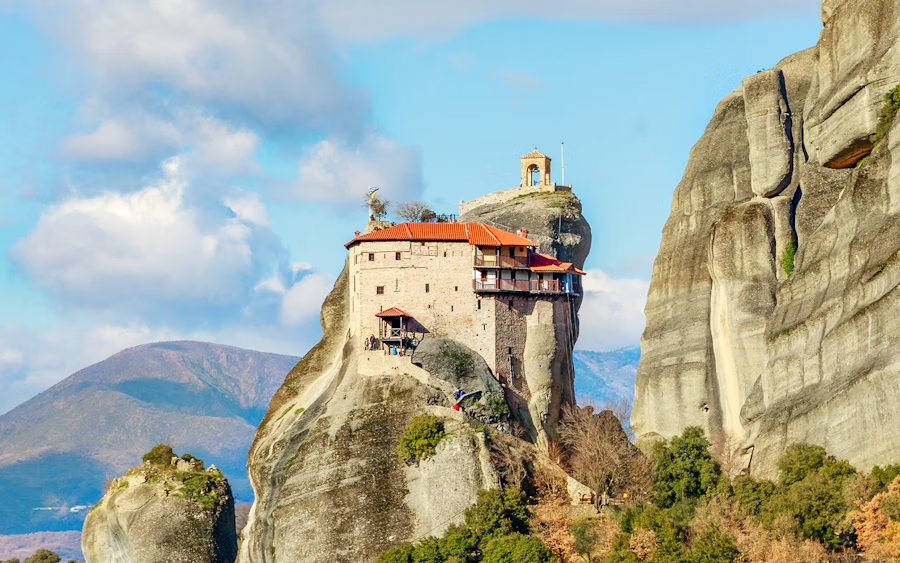

On Orthodox Good Friday, I took a full-day tour of Meteora, a stunning area of “rock and cliff formations capped by centuries-old Greek Orthodox monasteries“. The warm weather was clear and glorious. It’s spring, and the indescribably beautiful landscape was awash with pink, purple, yellow, and white vegetation! Our tour group was led by Ammon Express, and included almost 50 people from different countries. It was a long, satisfying day and a bit hectic, as large tour groups often are…

I took tons of photos, but somehow lost them while downloading from iPhone to laptop. When there’s time, I’ll figure out what happened. and try to get them back. This post contains media shots and videos.

Ancient monasteries are a fascination of mine, and Meteoron wonders are among the most spectacular I’ve seen! That aside, the region isn’t only famous for its 14th-century monasteries, but also “130,000 years of human history, featuring the world’s oldest known human-built structure inside Theopetra Cave“.

_____________
“The Chasia Mountain range is characterized by thermophilous deciduous forests, which support diverse plant communities adapted to warmer conditions.” Grokipedia
_____________

Human History
During the Last Glacial Maximum (LGM), a 23,000-year-old stone wall was built at the entrance to Theopetra Cave. The barricade was likely built to protect its inhabitants from cold weather. The wall is “significantly older than Egypt’s Great Pyramid of Khufu,” built 4,500 to 4,700 years ago.
Meteora is many things – a Greek Orthodox Church monastic center, the largest archaeological site in Greece, and a UNESCO World Heritage Site. Links in this post provide details about this spectacular area. Many technical terms are over my head, but I bet archeologists go wild over Meteora!

_____________
“Since early Christianity, Meteora cliffs have been a perfect location for absolute isolation – where individuals found peace and harmony, supporting the ongoing struggle for spiritual ascension.” Visitmeterora.travel
_____________
Located beside the Pindos Mountains in western Thessaly, Meteora rock columns rise from the ground in a form difficult to explain geologically. “They’re not like volcanic plugs of hard igneous rock found elsewhere in the world“. The rock formations are “composed of a mixture of sandstone and conglomerates of mud, stone, and sand formed millions of years ago“.

_____________
“Meteora is one of the most impressive molassic accumulations in the world, with an iconic landscape of pinnacles and rock pillar formations.” International Commission of Geoheritage
_____________
Theopetra Cave
A few kilometers before reaching Meteora, we passed Theopetra Cave. The cave “contains records of two significant cultural transitions at the end of the last Ice Age – replacement of Neanderthals by modern human societies and a transition from hunting-gathering to farming”.

The 5,400 sq. ft. rectangular cave is northeast of Theopetra Village, at the foot of the Chasia Mountains. The cave forms a natural boundary between Macedonia and Thessaly, with the Trikala Region Lithaios River flowing in the forefront.
Ancient History
Caves in the vicinity of Meteora were “continuously inhabited between 50,000 and 5,000 years ago,” when Earth was experiencing an ice age. Paleolithic and neolithic artifacts of human occupation were found imprinted on stone walls and soil inside the cave.


_____________
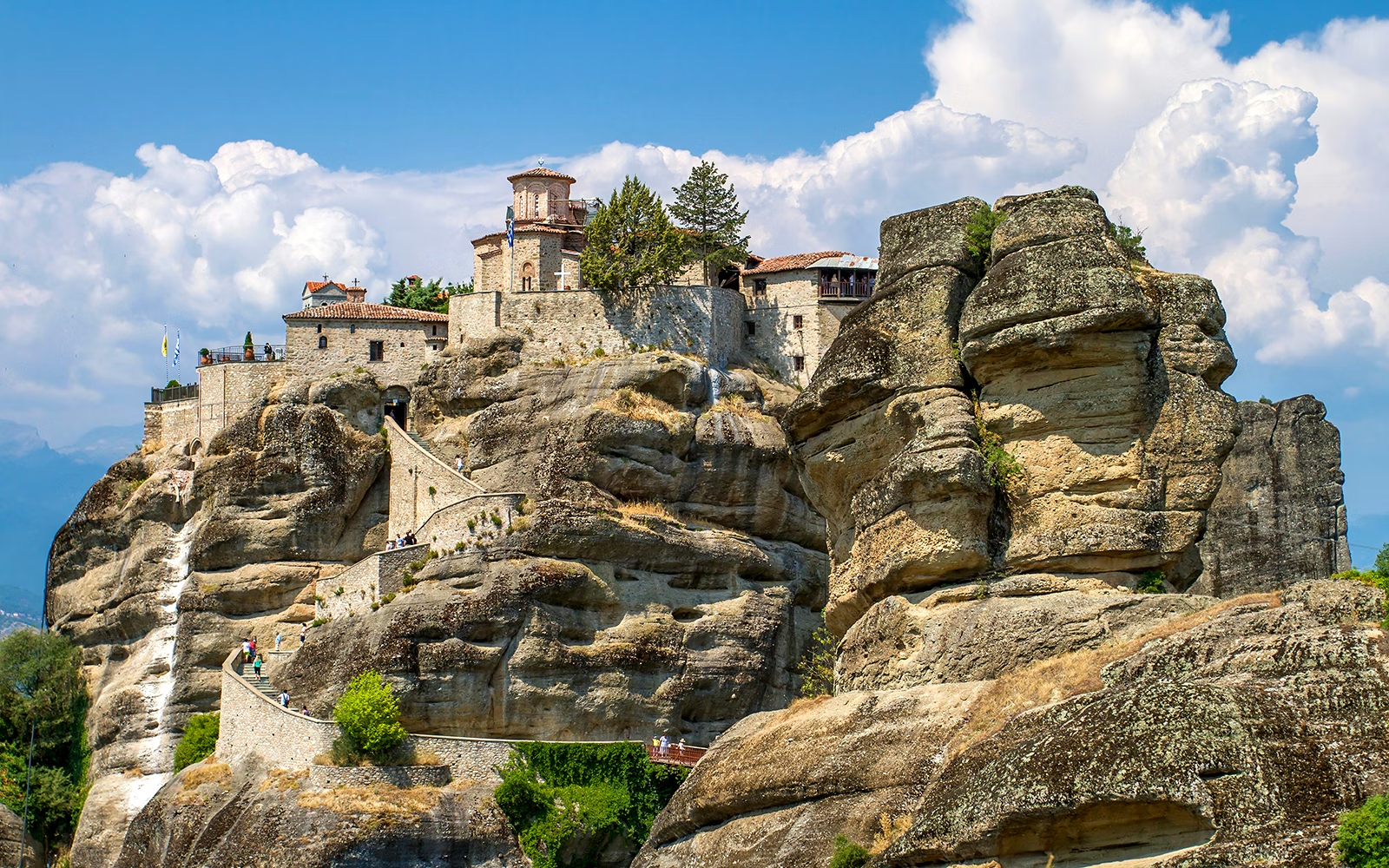
“This vast complex of towering rock pillars, with six active monasteries perched on sandstone cliffs, creates a surreal landscape found nowhere else in the world.”
_____________


Active Monasteries
Originally, there were 24 monasteries. Today, six monasteries remain active. We visited two of the lower monasteries Holy Trinity and St. Stephen. Holy Trinity is the lowest monastery and where many films, including the James Bond Movie For Your Eyes Only were filmed. We accessed St. Stephen via a long, steep, winding staircase. Monks built Holy Trinity and St. Stephen with assistance from the local population. They’re impeccably maintained:
- Holy Monastery of Great Meteoron
- Holy Monastery of Varlaam
- Holy Monastery of Rousanou
- Monastery of Holy Trinity
- Holy Monastery of St. Stephen
- Holy Monastery of St. Nicholas of Anapausas
On the way back to Thessaloniki, we stopped at Meteoron Panorama restaurant in Kalambaka Village to enjoy a late lunch of delicious Greek cuisine. I had fresh mushroom soup made from famous Meteoron mountain mushrooms and Greek stuffed peppers – gemista. It was a fabulous day that I’m still sorting in my head. As with other places visited during fast-moving tours, I’d like to return to Meteoron and spend more leisurely, less-rushed time exploring the area!

Next week I’ll visit Mt. Olympus!
Very interesting post with plenty of information. Also, thank you for linking to the Olympus Mountaineering blog! Enjoy your time on Mt. Olympus!