


The Colosseum Archaeological Park is more than its famous, often photographed amphitheatre. I learned much during a three-hour walking tour, as our Italian guide, Alessandra, quickly covered a vast amount of information.
Rome tour guides are experts on their subject matter and complete formal training before they’re licensed. In Italy, falsely representing yourself as a “licensed tour guide” is illegal. It can result in a jail sentence of up to 6 months! Higher education is encouraged, and annual university tuition in Italy is 700 Euros (800 USD)!

Tours are a great way to explore attractions, but the abundant detailed information provided is usually more than most tourists can process. Before and after research is almost always required – at least for me…

After several days of rain, the weather was crisp and clear, so we enjoyed spectacular vistas from Colosseum hills. I took photos until my iPhone battery needed recharging.

Metro Pass
I purchased a two-week Metro pass to eliminate the need for daily tickets. Amazingly, a weekly Metro pass – including buses and trams – costs less than one uber ride in Rome. The Metro system isn’t difficult, but things can get hectic. It takes a few days to get comfortable moving around the city and transferring between lines to reach your destination. I’ve traveled in the wrong direction a few times :o) but am getting better. Getting lost is part of the travel experience. Locals are kind when you need help finding the right connecting train. Crowded trains are a haven for Rome’s infamous pickpockets, so you must be careful.

Archaeological Park
The Archaeological Park includes three major complexes – the Colosseum (Flavian Amphitheatre), Roman Forum, and Palatine Hill. During the tour, we passed 15 important structures within the three complexes. They’re listed below, and exquisite professional media shots are attached. Alessandra provided fascinating information on each structure. Click the links below for details:
- Tabularium 68 BC
- Temple of Concord 367 BC
- Arch of Septimus Severus 202 AD
- Temple of Antonio Pio and Faustina 141 AD
- Rostra Tribune 44 BC
- Curia Julia 1st Century BC
- Temple of Romolo Valerio 309 AD – Emperor Massenzio’s son
- Basilica of Massenzio 307 AD
- Portico of the Consent Gods 3rd century BC
- Temple of Saturn 494 BC
- Basilica Giulia 1st century BC
- Temple of Castor and Pollux 484 BC
- Temple of Divo Giulio 42 BC
- Arch of Augustus 29 BC
- Temple of Vesta rebuilt 6th century BC


In addition to these major structures, Alessandra elaborated on the history of Roman emperors, empires, and republics! History included information about Rome’s formation in 753 BC, its seven kings, life when Rome became a republic in 509 BC, and changes after Dictator Caius Julius Cesar was murdered in 44 BC. She also detailed major timelines:

- 312 AD Constantin First Christian Emperor
- 380 AD Theodosium Christianity Becomes State Religion
- 476 AD Collapse of the Western Roman Empire

Anfiteatro Flavio a.k.a. Colosseum
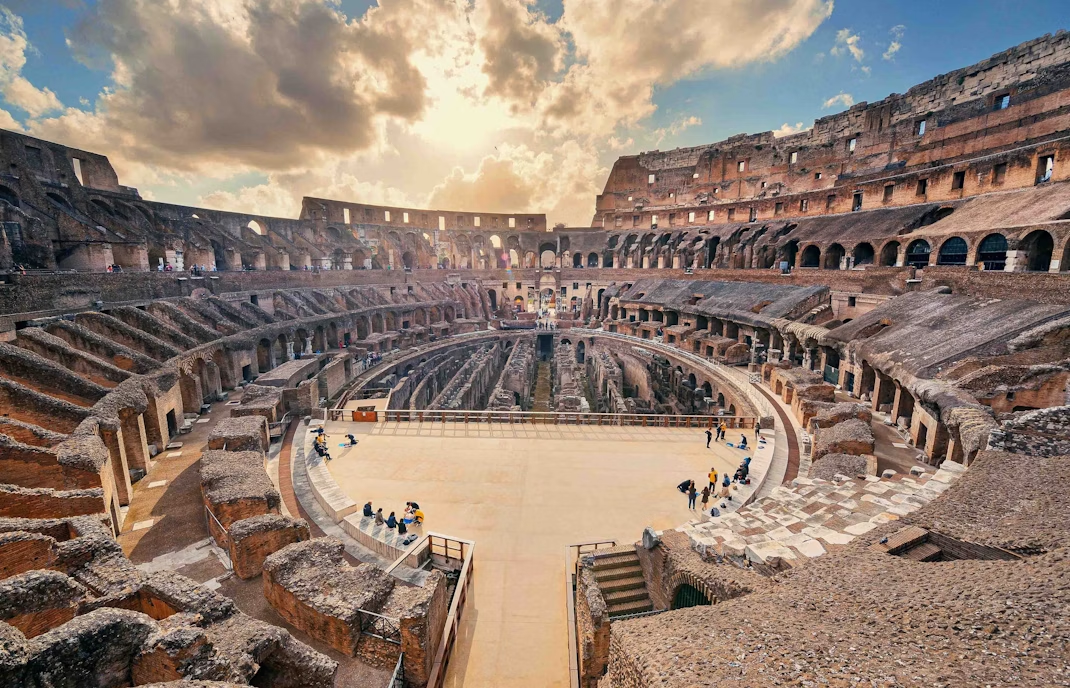
The Anfiteatro Flavio (Flavian Amphitheatre) is the “largest and most famous amphitheatre in the world”. It’s better known as the “Colosseum”, and was named for the massive Colossus of Nero statue that stood nearby. The Colosseum was built in the first century AD by the Flavian Dynasty. Its purpose was hosting popular and violent animal hunts, executions, and gladiator fights.

____________
“Once a mighty statue, the Colossus of Nero has completely vanished except for some concrete blocks that were once the foundation of its marble pedestal.” visit-colosseum-rome
_____________

_____________
“The Roman Empire, starting with Augustus in 27 BCE, lasted for roughly 500 years in the West (until 476 CE), but continued as the Eastern/Byzantine Empire for nearly another thousand years (until 1453 CE), making its total lifespan over 1,400 years.”
_____________
Roman Forum
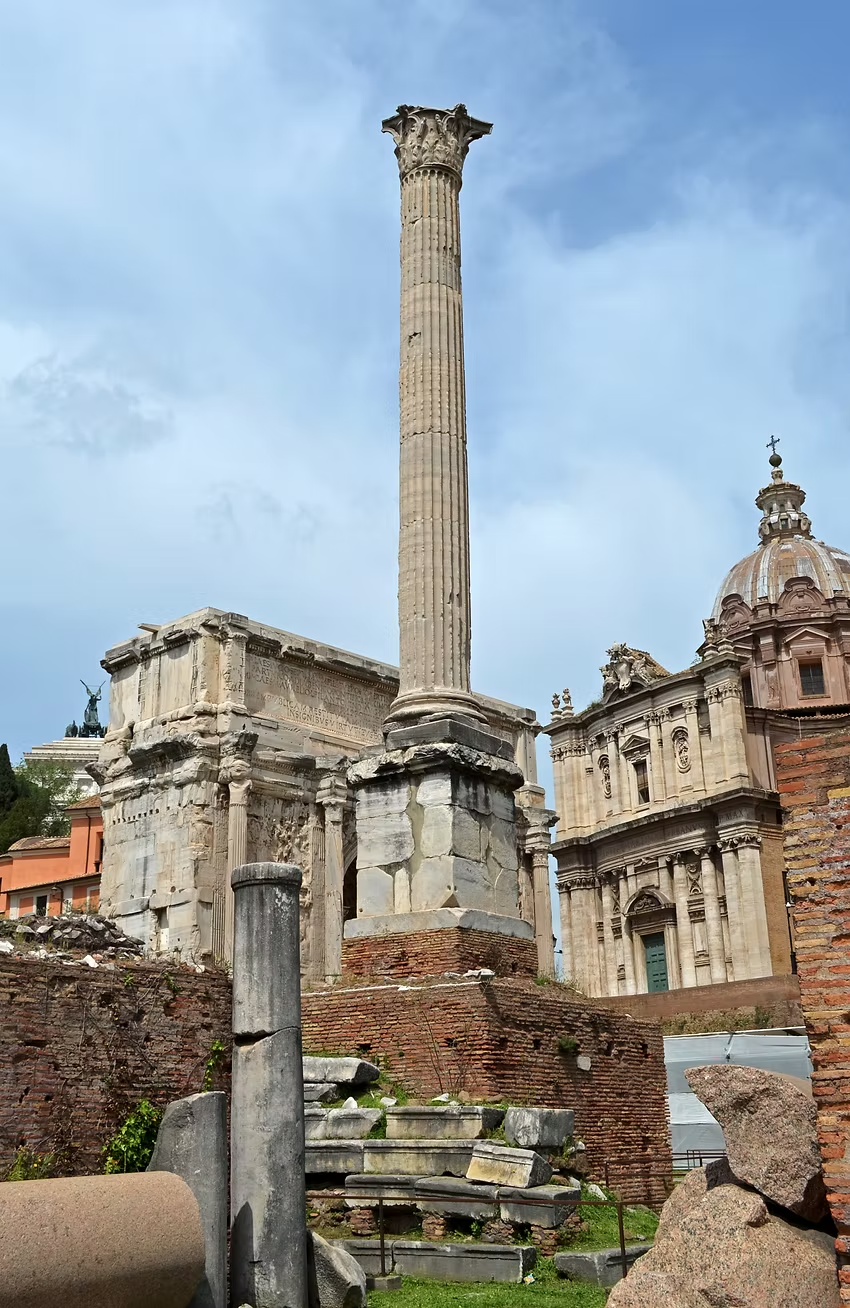
The Roman Forum was the “centre of Roman public life for over a millennium”. It was embellished over centuries with massive monuments, buildings for political, religious, and commercial activities, and civil basilicas housing judicial activities. Forum changes were made during the Republican and Imperial Ages, including temples dedicated to the memory of deified Roman emperors and victories over the Parthians. At the beginning of the 4th century AD, Emperor Maxentius built a temple dedicated to the memory of his son, Romulus. The last monument built in the Forum was a Column erected in 608 AD to honour Byzantine Emperor Foca a.k.a. Phocas.

_____________
“According to Roman mythology, the cave where Luperca lived – the Capitoline She-Wolf who cared for brothers Romulus and Remus – was on Palatine Hill. Legend has it that when the brothers grew up, they decided to form a city on the banks of the Tiber River. When they couldn’t agree on which hill to build the city, Romulo killed Remus and founded Rome.” Rome Museum
_____________

Palatine Hill
Rome was founded on Palatine Hill, where “archaeological discoveries revealed the remains of Iron Age settlements”. Palatine Hill was the site of several Roman cults. Lupercus was a cult celebrated in a cave on the slopes of the hill, where the “she-wolf allegedly nursed the divine twins Romulus and Remus”.

_____________
-
“Roman cults and secret societies were prevalent throughout the Roman Empire. They were characterized by religious syncretism, ritual secrecy, and initiation rites. Their influence is seen in various aspects of Roman culture, including art, literature, and architecture.” The Roman Empire
- _____________

Until the end of the Republican Age, Palatine Hill was the residence of the Roman ruling class. During the Imperial Age, it became the “aristocratic quarter of the city with elegant residences characterized by exceptional pictorial and floor decorations”.

_____________
“Palatine Hill transformed into a grand complex that was the palace of the emperors.”
_____________
More later…